


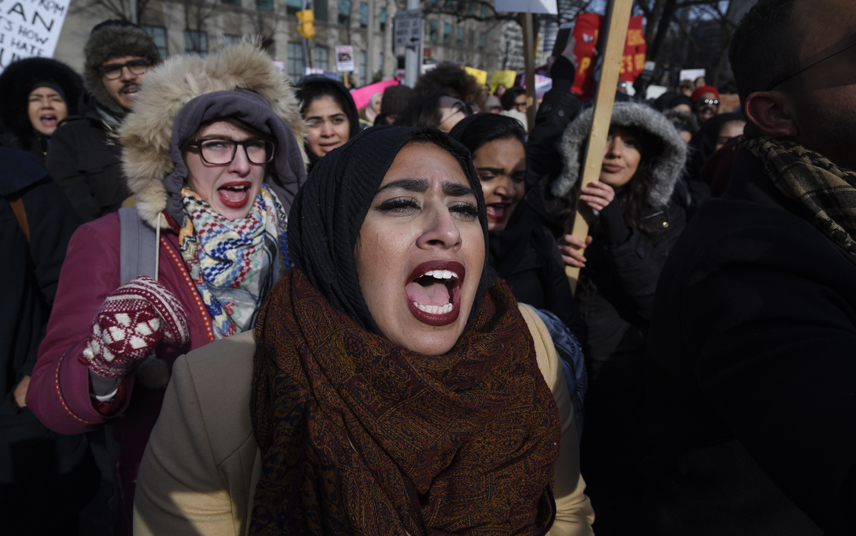
From the early days of Islam and in the centuries that followed, Muslim women have been scholars, physicians, politicians, poets, businesswomen and legal experts. Women supported, led and actively shaped society, like Razia al-Din who ruled the Delhi Sultanate in India in the thirteenth century; or the female surgeons in fifteenth century Turkey who performed life-saving procedures; or the philanthropist Fatima al-Fihri who founded the oldest existing university in the world in ninth century Morocco.
Female leadership forms part of the lessons and message of Muslim scripture. The Quran highlights the account of the Queen of Sheba, who is presented as a prime example of sound political governance, and serves as an inspiration and legacy for women throughout time.
The Quran states that education is a duty enjoined upon everyone, male and female. Across the centuries, there were thousands of female scholars who excelled in theology, law and philosophy.
They taught women and men throughout the Muslim lands, who travelled far to learn at their feet. Among the students of the seventh century scholar Umm al-Darda from Syria, were imams, judges and even a powerful caliph whose rule extended from Spain to India. More recently in the nineteenth century, the West African scholar, historian, poet and princess, Nana Asma’u was a highly influential educator who trained female teachers and devoted herself to women’s education.
Islam gave recognition and honour to women in both public and private spheres of life, and today, Muslim women continue to build and lead in all fields of society, from educating communities, to tackling injustice and inequality. They continue to reclaim their position as champions of faith.